
At Gyeongju's APEC summit, world must move from rivalry to reciprocity, from dominance to shared legitimacy
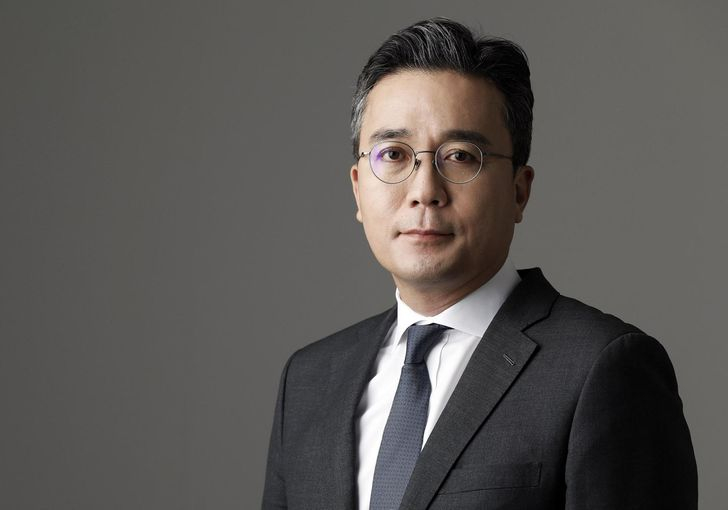
Kim Yoo-suk, president of the Chey Institute for Advanced Studies / Courtesy of the Chey Institute for Advanced Studies
As world leaders gather in Gyeongju, North Gyeongsang Province, this week for the Asia-Pacific Economic Cooperation (APEC) summit ? a meeting that will mark the first United States?China presidential encounter in years ? the world’s attention turns to the uneasy yet vital relationship between its two largest economies.
Witnessing the fierce rivalry between these two powers, especially in manufacturing, raises a deeper question: Why did the world once celebrate America’s industrial dominance, yet now view China’s rise in manufacturing with unease?
In the 1950s, the U.S. produced half of the world’s manufactured goods: 57 percent of all steel, 80 percent of automobiles and 94 percent of aircraft. However, this overwhelming dominance was not regarded as a threat
The war-torn world desperately needed America’s productive power, and that need endowed U.S. leadership with moral legitimacy.
The U.S. rebuilt Europe and Asia, established the Bretton Woods system and underwrote the rules of a liberal economic order. American industrial supremacy was framed as a public good ? the foundation of global stability and prosperity.
Today, China accounts for roughly 30 percent of global manufacturing, comparable to America’s postwar position. But perception has shifted. China’s massive industrial capacity has outpaced global demand, leading to falling prices, excess inventory and friction over subsidies, market access and trade imbalances.
What once symbolized stability now raises concerns of dependency and distortion ? a characterization that Beijing, for its part, firmly rejects, arguing that its industrial growth reflects global demand and efficiency, not manipulation.
The contrast reveals an essential truth: legitimacy, not scale, defines leadership in the global economy.
America’s industrial might was tied to a moral narrative of rebuilding allies and creating shared prosperity. China’s, by contrast, is often viewed through the lens of state-driven overcapacity and uneven reciprocity. Industrial power without legitimacy easily turns from reassurance into anxiety.
Legitimate leadership in the 21st century will depend not on who manufactures more, but on who can balance supply and demand in a far more complex world. The age of artificial intelligence (AI), decarbonization and digital transformation demands a higher form of equilibrium ? one that coordinates technology, energy, security and the environment.
AI disperses knowledge and production capabilities across borders, while decarbonization is redrawing the energy map and digital transformation is shifting value creation from physical output to data-driven connectivity. In such an era, no single “factory of the world” can sustain global trust or stability.
From this perspective, neither China’s state-led overcapacity model nor America’s “benevolent dominance” of the 1950s offers a viable template for today. The challenge before the Gyeongju APEC summit is not merely to ease trade frictions, but to redefine industrial legitimacy for the 21st century. Leadership will be measured not by power or production, but by the ability to govern interdependence and turn competition into cooperation, and dominance into connection.
If that vision can take root in Gyeongju, the meeting could mark more than a diplomatic milestone. It could signal the beginning of a new industrial order ? one built not on hegemony, but on trust, transparency and shared responsibility. That, more than any trade deal, would be the breakthrough history remembers from Gyeongju.
Kim Yoo-suk is president of Chey Institute for Advanced Studies and serves as an executive vice president of SK Inc., the holding company of SK Group. A former diplomat, he served in the Foreign Policy Division of the Ministry of Foreign Affairs and the Protocol Division at the Office of the President.
코리아타임스 = 남현우 기자
원문보기